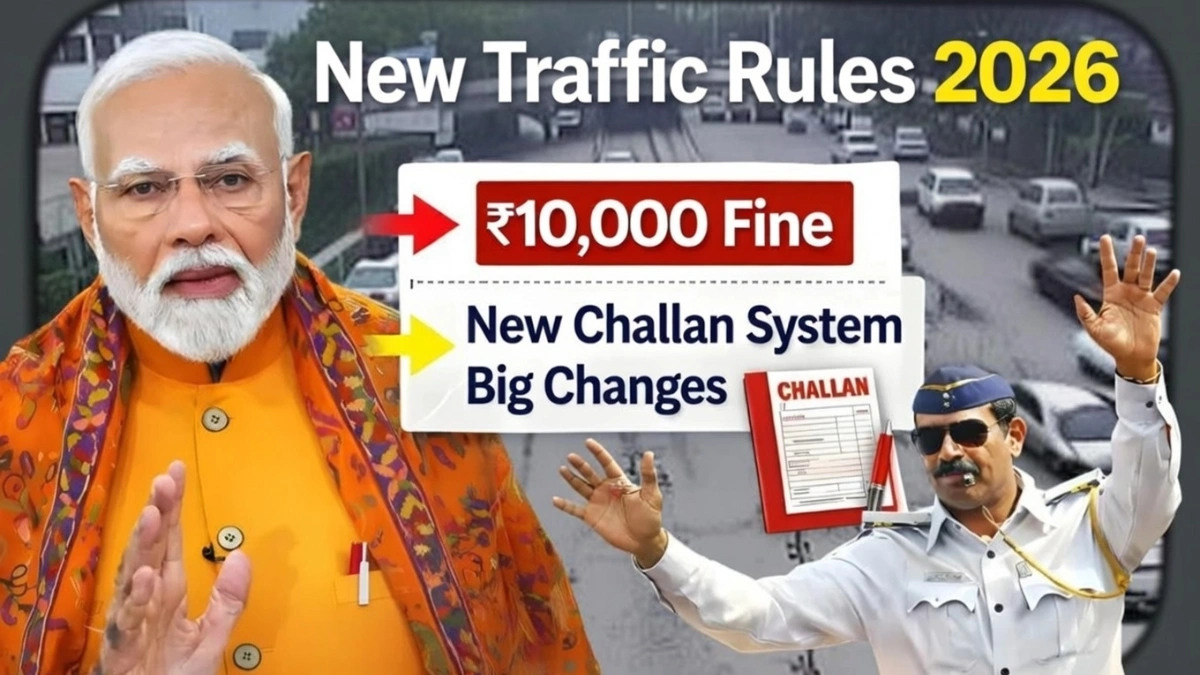
A strict shift in road safety policy has arrived with the New Traffic Rules for 2026, introducing fines up to ₹10,000, an upgraded digital challan system, and tougher compliance requirements for drivers. The move aims to reduce accidents, curb repeat violations, and bring greater discipline to Indian roads through technology-driven enforcement.
These changes directly impact private vehicle owners, commercial drivers, and two-wheeler riders.
Why Traffic Rules Were Made Stricter in 2026
Despite earlier reforms, authorities observed persistent violations such as overspeeding, drunk driving, signal jumping, and unsafe riding practices. Accident data highlighted repeat offenders and weak deterrence as major issues. The 2026 update focuses on higher penalties, faster enforcement, and fewer loopholes.
The goal is safety-first enforcement, not revenue generation.
₹10,000 Fine Explained: Which Violations Attract It
Under the revised framework, serious and repeat offences can attract fines up to ₹10,000. These include dangerous driving, drunk or drug-impaired driving, racing on public roads, and repeated overspeeding. In some cases, fines may be accompanied by licence suspension or legal action depending on severity.
Higher penalties are meant to deter habitual violations.
New Digital Challan System Rolls Out
The challan system has been upgraded to a fully digital, real-time model. Violations captured via CCTV, speed cameras, and ANPR systems are processed instantly, with challans issued directly to the registered vehicle owner. Notifications are sent via SMS and official apps, reducing disputes and delays.
This system minimizes manual intervention and errors.
Fewer On-Road Stops, More Automated Enforcement
With improved surveillance, random roadside stops are expected to reduce. Automated detection handles most violations, allowing traffic police to focus on safety management rather than manual checks. Evidence such as images or timestamps is linked to challans, improving transparency.
Drivers are encouraged to check and clear challans promptly.
Impact on Everyday Drivers
For compliant drivers, the experience becomes smoother with fewer interruptions. For violators, penalties are swift and unavoidable. Repeated offences can escalate consequences, including higher fines and licence actions. Maintaining documents, following speed limits, and obeying signals are more important than ever.
Ignorance of rules is no longer a defense.
Commercial Vehicles and Fleet Operators
Fleet operators face stricter accountability. Violations recorded against vehicles can impact company compliance scores, insurance considerations, and driver records. Regular training and monitoring are advised to avoid cumulative penalties.
Compliance becomes a business necessity.
Oversight and Enforcement Authority
The updated traffic rules and challan systems are implemented under the guidance of the Ministry of Road Transport and Highways, with state traffic police responsible for enforcement. Uniform standards aim to ensure consistency across regions.
Official notifications outline state-wise rollout timelines.
What Drivers Should Do Now
Drivers should review the updated rules, ensure vehicle and licence details are accurate, and use official portals to track challans. Avoiding violations is the simplest way to stay penalty-free. Timely payment of challans prevents escalation and additional charges.
Staying informed saves money and points.
Conclusion: The New Traffic Rules 2026 mark a decisive move toward safer roads through higher fines, smarter enforcement, and digital transparency. With penalties reaching ₹10,000 for serious offences and a real-time challan system in place, compliance is no longer optional. Drivers who adapt to the new rules will benefit from safer, smoother travel, while violations will carry swift consequences.
Disclaimer: This article is for informational purposes only. Fines, enforcement practices, and implementation timelines may vary by state and specific offence. Drivers should refer to official notifications from transport authorities for confirmed details.